

The Anxious Generation - Mental Health Issues
New polling of 18-30s finds widespread self-reported mental-health issues, weak confidence in education, and a split outlook on Britain’s future.
As part of its Anxious Generation series, Adam Smith Insights has polled 18-30-year-olds on their views on mental health, education and their outlook on Britain’s future.
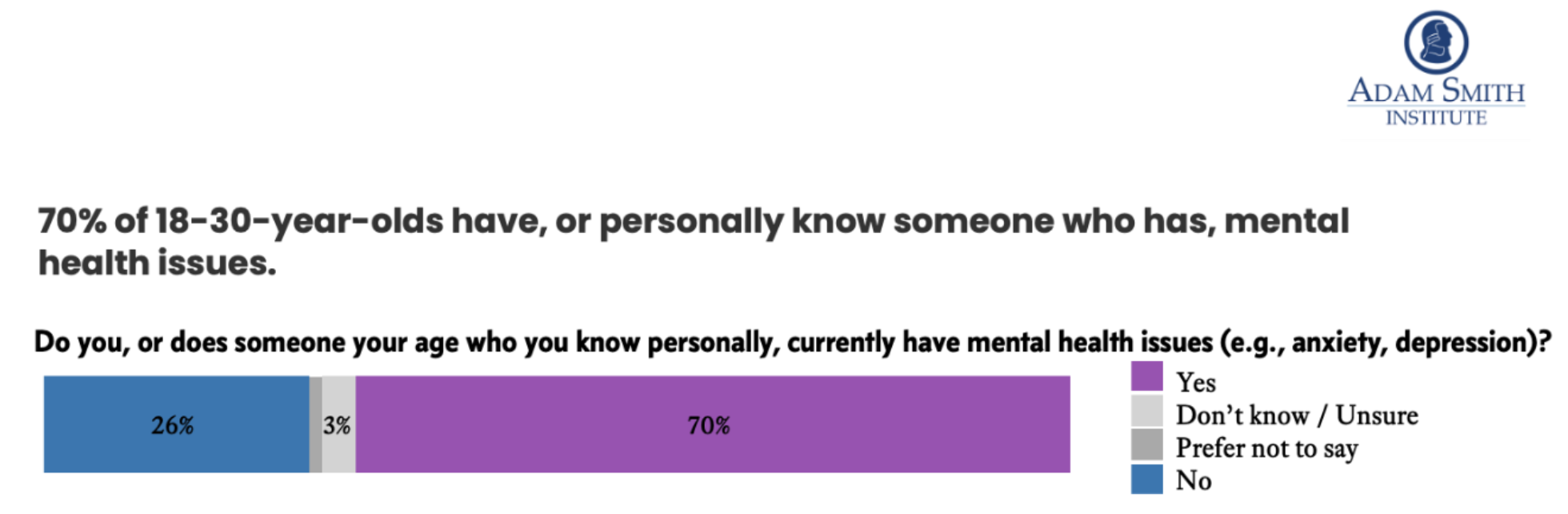
The nationally representative poll shows self-reported mental-health issues are widespread among young people. Seven in ten 18-30-year-olds say they currently have, or personally know someone their age who currently has, a mental-health issue. Only 26% report no such experience.
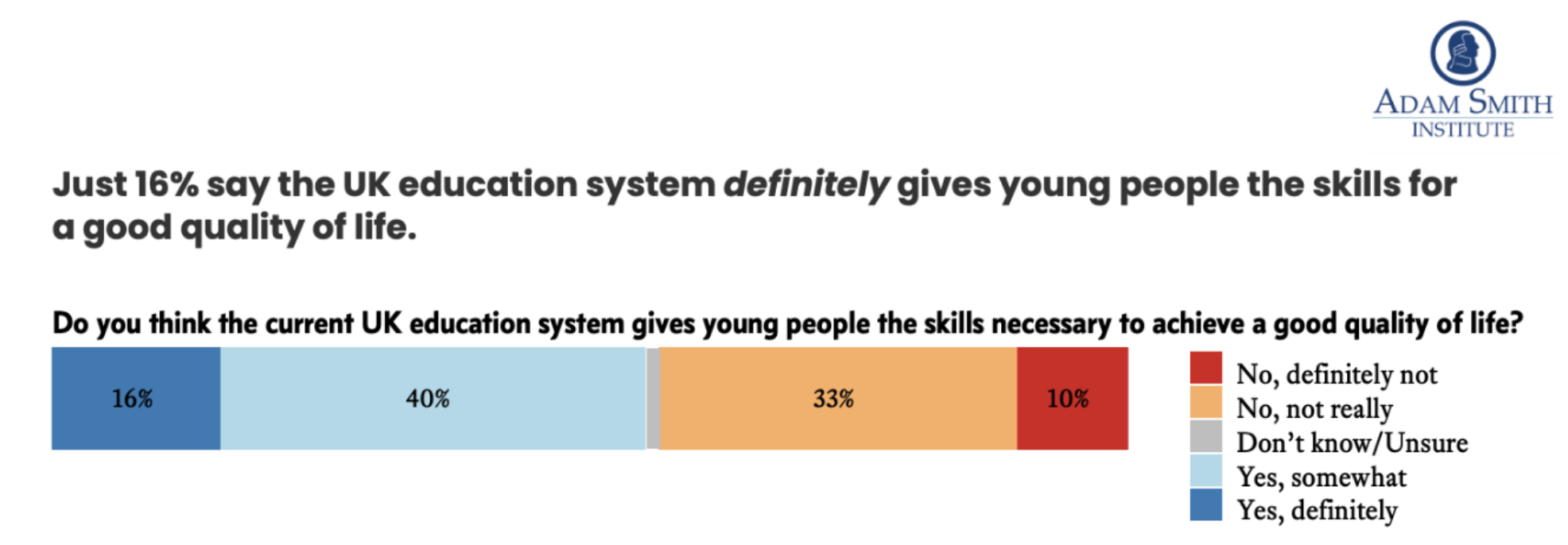
Meanwhile, confidence in the UK’s education system is fragile. Only 16% of young people - members of the population who have been to school recently - are confident that the education system in the UK equips young people with the skills needed to secure a good quality of life.
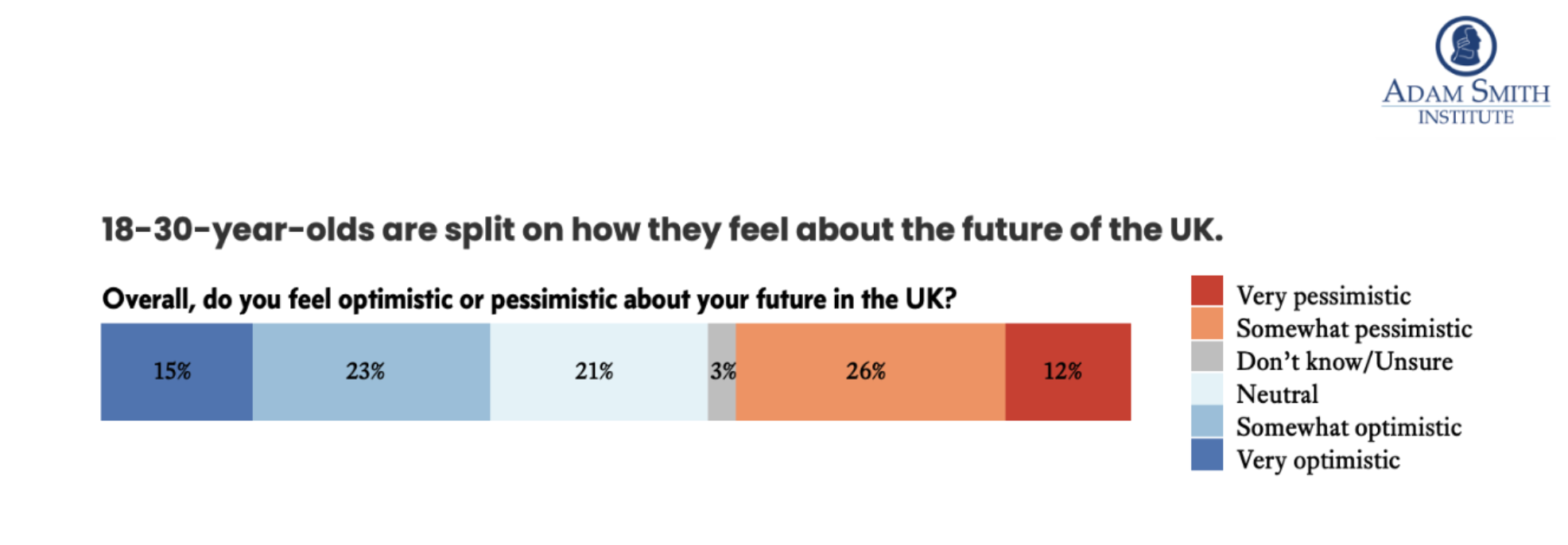
And when it comes to the future of the UK, Britain’s young adults are split down the middle. 38% are pessimistic (very or somewhat) while 38% are optimistic (very or somewhat), and 21% are neutral.
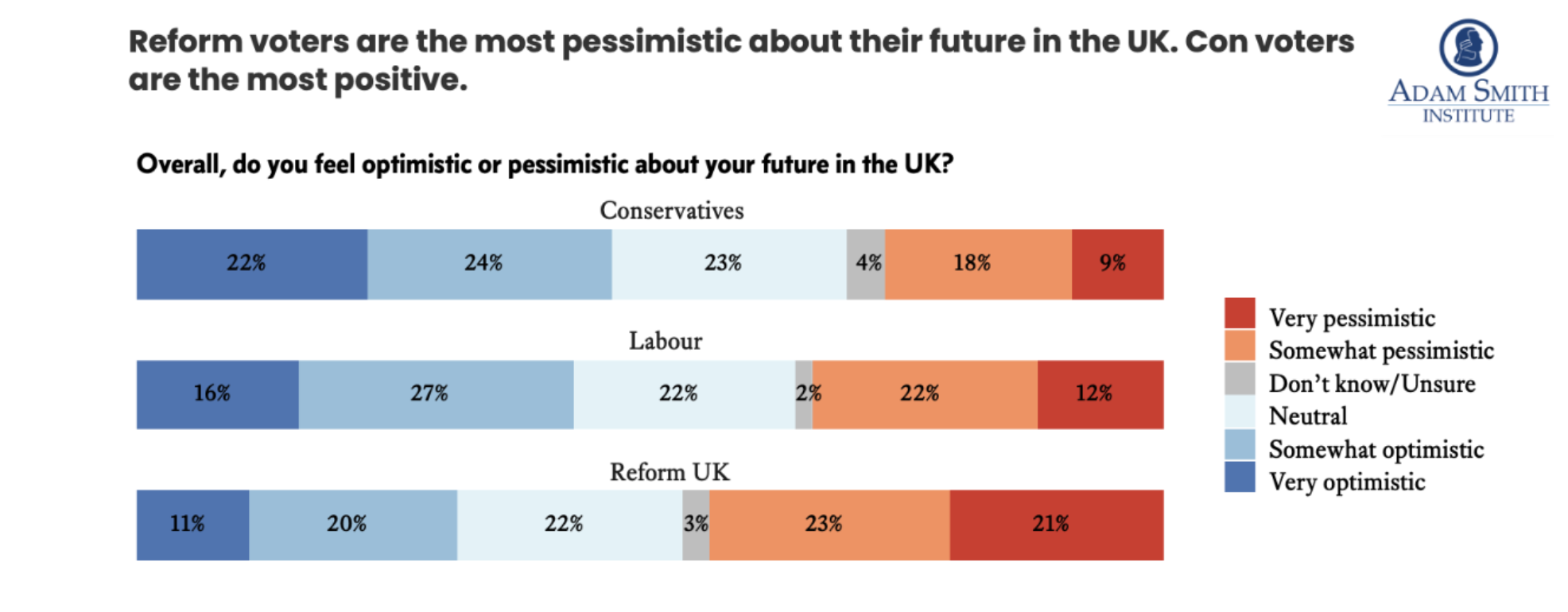
However, there are notable differences across parties, with Reform UK voters far more pessimistic than Conservative and Labour voters.
These findings indicate that self-reported mental health issues seem to be ubiquitous among young Britons. Feeling underprepared for life and divided over the country’s direction, this final round of polling paints a picture of a generation gripped by uncertainty.
KEY FINDINGS:
70% of 18-30 year olds have, or personally know someone who has, mental health issues.
Only 26% of 18-30 year olds say they have not had or known someone in their peer group who has mental health issues.
4% did not know or declined to answer.
Just 16% say the UK education system definitely gives young people the skills for a good quality of life.
56% say that it somewhat or definitely gives young people the skills for a good quality life.
43% of young people say it does “not really” or “definitely does not” give young people the skills necessary for a good quality life.
18-30 year olds are split on how they feel about the future of the UK.
38% are very pessimistic or somewhat pessimistic about the future of the UK
38% are very optimistic or somewhat optimistic about the future of the UK
21% are neutral.
Among the three major parties, Reform voters are the most pessimistic about the future of the UK. Conservative voters are the most positive.
46% of Conservative voters are very optimistic or somewhat optimistic about the future of the UK, while 27% are pessimistic or somewhat pessimistic.
Similarly, 43% of Labour voters are very optimistic or somewhat optimistic about the future of the UK, while 34% are very pessimistic or somewhat pessimistic.
Only 31% of Reform UK voters are very optimistic or somewhat optimistic about the future of the UK, while 44% are very pessimistic or somewhat pessimistic.
Across all three parties, nearly identical percentages of voters are neutral about the future of the UK (Con: 23% Lab: 22% Ref: 22%).
Methodology:
Adam Smith Insights ran a poll on behalf of its sister think tank, the Adam Smith Institute, of a nationally representative sample of GB adults:
Nationally representative poll of UK 18 - 30 year olds in the UK.
Poll conducted via online panels
Field dates 8 July – 10 July 2025
Sample size = 1338 people
Poll weighted to population targets to match GB 18-30 year old population profile across age, gender, region, ethnicity, and 2024 general election vote using ONS 2021 Census data, age-by-vote distributions derived from Ipsos’s post-election analysis: “How Britain voted in the 2024 election”, national vote share data from the Electoral Reform Society’s 2024 general election results, and YouGov/BES polling.
The poll results, with a median completion time of approximately 5 minutes, has a margin of error of ±2.7%.
Respondents were filtered for completion quality (e.g., straight-lining, speeding), and responses with incomplete or invalid data were excluded from analysis. No imputation was applied.